How game music ended up in concert halls
It begins as a set of reactive layers tethered to player actions, and every arrangement for a live orchestra is a labour of reconstruction. The transformation rarely amounts to simple transcription. A game soundtrack that adapts to combat intensity, exploration and menu screens must be pulled apart and reassembled into a fixed linear piece with a beginning, a middle and a deliberate final bar. That rebuilding, and the rights clearance it demands, is where the real cost of getting game music onto a stage sits.
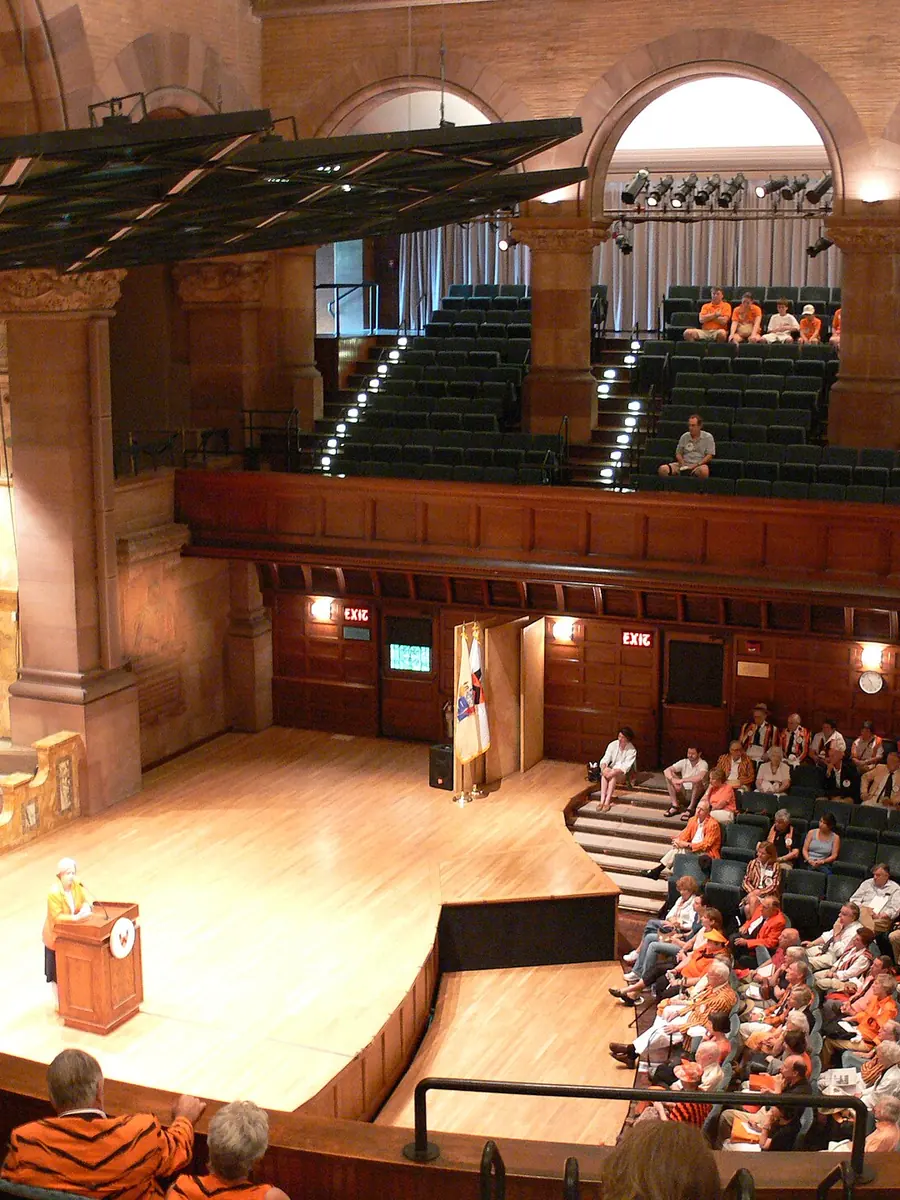
Rewriting the engine for the podium
A game engine reads music not as a single line but as a collection of audio files and instructions that tell it when to start, stop, crossfade and layer. Interactive music systems in game engines support seamless transitions, synchronised playback of multiple tracks and the ability to add or remove instruments according to game intensity. To make those transitions work, audio files must be trimmed to exact bar or beat lengths so they loop without a perceptible seam. That makes for a responsive listening experience as the player moves through a space or shifts from exploration to combat, but it leaves nothing a conductor can simply unfold on a stand.
What an arranger receives is a folder of short, tightly cropped stems, each designed to repeat endlessly under the right conditions. A concert performance needs fixed duration, a defined arc and a clear ending. None of those exist in the raw material. The arranger must decide how many repetitions of a loop become a section, where the climax falls, which of the layered instrumental lines to expose at any moment and how to stitch together fragments that were never intended to be heard consecutively. The result is an edited, scored work that resembles the original only in its thematic material, not in its structure.
That structural gap explains why early game scores pose a particular challenge. In the nineties, game music systems commonly used a fixed set of simultaneous voices or channels, and composers wrote for constrained hardware rather than for an orchestra. The music existed as a sequence of commands for a sound chip, not as notation for human players. No conductor could pick it up and call a downbeat; the notes had to be extracted from a ROM or an audio recording, deciphered into pitch and rhythm, and then distributed across an ensemble that had orders of magnitude more timbral variety than the original chip ever allowed. Orchestrating a piece written for three or four monophonic voices is a creative act as much as a technical one, and it can be decades before a convincing concert version emerges.
Rights that travel in separate parcels
Even after an arrangement is finished, the legal ground under a concert performance is rarely flat. Game music routinely bundles several distinct rights, and none of them extinguishes the others. Using an existing recording in a game requires permission for both the musical composition and the sound recording. If the music was composed, performed and recorded specifically for the game, the developer may own the sound recording but only license the underlying composition. If lyrics are present, they carry their own layer of rights alongside the composition and recording. A concert programme that includes even a short suite can therefore depend on clearing obligations that were originally negotiated for a different medium and a different economic model.
The sync-and-master split is the most familiar fork. Bringing an existing track into a game demands a synchronisation licence for the composition and a master use licence for the recording. When that same music is then taken into a concert hall, the performance triggers public-performance rights, which are managed separately by performing rights organisations. What was a distribution-rights question in the game becomes a performing-rights question on the stage, and the two are licensed through different channels. A game publisher may have obtained a sync licence for global digital distribution; that does not automatically grant a third-party orchestra the right to programme the work in a hall.
How the official record frames it
Video-game audio elements are classified as part of an audiovisual work, so the original music soundtrack falls under the same copyright registration as the game itself. That classification does not dissolve the separate rights in the music, but it does shape how the initial rights are held. Under copyright law, a commissioned score for a video game can qualify as a work made for hire, meaning the developer owns the copyright from creation rather than through a later assignment. A concert arranger approaching a publisher for permission is therefore dealing with an entity that may hold the audio recording outright but only an exclusive licence to the composition, or may hold the composition as a work made for hire while the recording sits with a third-party studio. Unpicking the chain takes time and legal resource, and the smaller the concert, the less likely it is that anyone will attempt the unpicking at all.
What a concert edit must supply
A live performance requires a score that starts, develops and ends. The interactive systems that make game music feel alive during play—branching layers, vertical crossfades, tempo changes tied to game state—none of them translate directly. The arranger must freeze a path through the possibilities and commit it to paper. A piece that once shifted instrumentation every time the player entered a new biome becomes a single instrumentation fixed in the programme; a loop that sustained tension indefinitely gets a structural close that the original never contained. It is the concert edit that creates the work the audience hears, and it is the concert edit that the rights clearance must cover, not the interactive source.
Game music can be playable in more forms than most composers ever imagined when they filled four channels of a sound chip, but concert performance usually depends on clearing multiple rights and turning interactive material into a fixed version that can end. That double translation—artistic and legal—is what makes the journey from cartridge to concert hall far longer than the running time of a symphony.