Why region locks existed, and what replaced them
A physical game cartridge bought in Tokyo would not fit into a console sold in London, and that was by design—but the original reason had nothing to do with controlling markets. It began because a television in Osaka could not display the signal a console built for Düsseldorf expected to send. Only later did that technical barrier harden into a system of deliberate gates, first in plastic and silicon, then in software tokens.
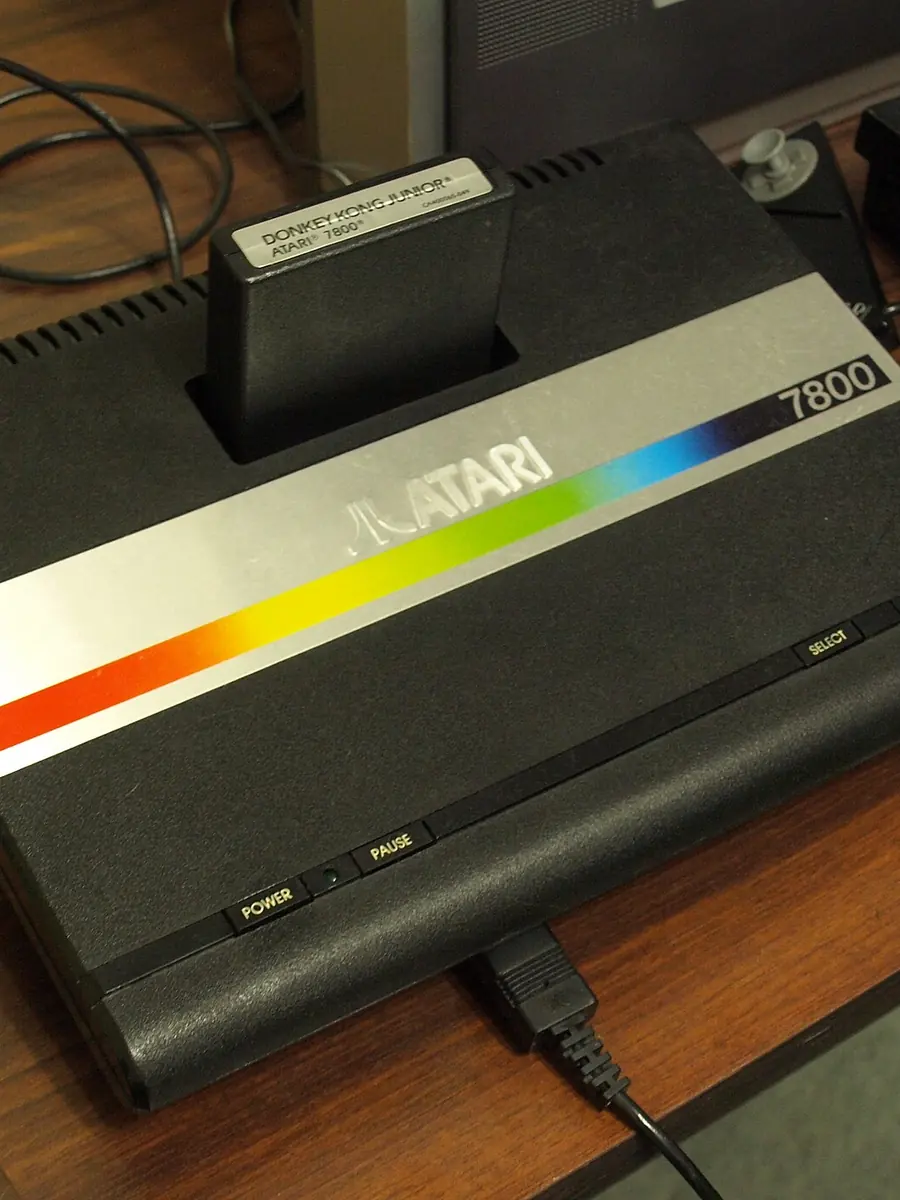
Analogue television standards drew the earliest regional boundaries
Before a game reached the screen, it had to speak the same video language as the set displaying it. The International Telecommunication Union’s recommendation on analogue television systems, published from the 1960s onward, codified the three dominant formats: NTSC, PAL and SECAM. Each used a different line count, a different refresh timing, and a different method of encoding colour information. A console designed around one of those standards produced a signal that a set built for another could not interpret, even if the physical connectors matched.
That meant a piece of entertainment software written for a PAL territory was, in a purely electrical sense, not fit for an NTSC market. The game might run, but the picture would roll, tear or lose colour. Hardware manufacturers therefore built their machines to the television standard of the destination country. A single release of a title could not be shipped globally without re-engineering the video output to match the local grid. This was the earliest form of region boundary, and it was more engineering than policy.
Cartridge shape and lockout chips turned compatibility into control
Once the industry had accepted that hardware would vary by territory, the step from accidental incompatibility to deliberate exclusion was short. Nintendo, in the 1980s and 1990s, used physically different cartridge shapes and slot arrangements so that a cartridge from one region could not be inserted into a console from another. The plastic hulls were not just a styling choice; they were a mechanical gate.
Underneath the plastic, the company went further. Nintendo’s hardware documentation describes an internal lockout mechanism: an authentication check between console and cartridge that had to succeed before the game would boot. The system did not translate formats or adapt signals; it simply refused to run unless the correct handshake occurred. This meant even a cartridge physically modified to fit could still be blocked by the console’s firmware. What began as a signal-compatibility problem had now acquired a second, harder layer—one that was about enforcement, not about making the picture work.
Software regions layered distribution control on top of the hardware
As optical media replaced cartridges, the physical shape ceased to be a reliable barrier—a disc is a disc—but the region coding did not disappear. Console regional software documentation from the 1990s onward records that platform holders began to embed region flags in the software itself. A console would read the flag and refuse to launch the title if the flag did not match the machine’s own region identity. This was no longer about PAL or NTSC; it was about licensing territories, release windows and local pricing structures.
The practice also meant that regional releases often persisted as separate software builds, not merely because of language localisation but because the content, the timing and the distribution chain all differed. A game shipped in one territory might have different title screens, altered background music or an entirely different set of licensed assets, each tied to a regional contract. The code itself was a distinct artefact, and the region flag served as the key that kept those artefacts in their assigned lanes.
Digital storefronts moved the gate from hardware to account data
What a plastic cartridge or a region-coded disc once enforced, a login now decides. Apple’s StoreKit developer documentation, an undated living specification, describes how storefront information determines what in-app products are available to a customer in a given territory. The system uses a storefront identifier to establish the customer’s region, and only items authorised for that storefront appear for purchase. The language is neutral—the documentation speaks of determining the customer’s region and offering region-appropriate products—but the effect is a gate that no longer needs a physical cartridge slot.
The check works at the level of the account, not the hardware. A console or a phone may be identical across markets, but the entitlements attached to an account are not. A game purchased with one region’s store credentials may not appear in the library when the same device logs into another region’s store. The physical medium has been replaced by a transaction record, and the gate now lives in the mapping of that record to a jurisdiction.
What changed, and what did not
The television-standard problem is gone. Modern displays handle multiple refresh rates and colour spaces without a flicker, so the old analogue incompatibility that once made a Japanese cartridge unusable on a British set is history. What remains is the commercial scaffolding that grew around it. Storefront region rules, separate software builds and content configurations are all inheritances of a system that started with a cathode-ray tube and ended in a database entry.
A physical cartridge could be imported, modified, or simply wedged into a different slot with enough determination. The account-bound restriction is quieter and harder to bypass, because it reroutes the question through a terms-of-service agreement rather than a soldering iron. The gate did not vanish; it migrated from the cartridge port to the login screen, and in doing so it became less visible and far more woven into the ordinary act of switching on a device.