Save batteries are dying: what that means for 1990s cartridges
A cartridge-era game save lives inside a chip that forgets everything the moment its trickle of standby power vanishes. The catastrophe is not the battery surgery itself; it is the quiet failure beforehand, when the cell’s voltage sinks below the threshold that keeps the memory in retention and the data winks out before anyone has read it off. For a generation of cartridges built around battery-backed SRAM, the order of operations is everything: read the save first, because once standby power is gone the data is gone with it.
Battery-backed save memory
Cartridge-based saves from the eighties and nineties relied on a simple but brittle arrangement. A static RAM chip holds data only as long as a supply voltage is present. The ZEROPOWER SRAM datasheet puts it plainly: battery-backed RAM needs a standby supply to preserve contents when the main supply is absent. When the console powers off, the cartridge’s own local battery takes over, feeding a tiny current into the VBATT pin. The datasheet describes this as providing backup supply in the event of failure of the primary VCC voltage.
What makes the design both clever and treacherous is its automatic write-protection. As the main supply decays, the RAM senses the drop and, within the power-fail window, locks itself against writes. Outputs go high impedance, inputs are treated as “Don’t care,” and the chip enters a quiet battery-backup state. In that mode the Xicor parts assert a RESET signal and block all communication to the device. The contents are frozen, but they are absolutely dependent on the battery supply voltage delivering enough to keep the SRAM cells and internal logic “awake,” as described. Lose that, and the whole state evaporates.
What the battery is doing
The battery inside a save cartridge is not a power source for play. It is a life-support drip for a memory chip that bleeds charge without it. The documentation notes that the battery supply voltage feeds both the SRAM array and the internal circuitry needed to stay in retention mode. In an industrial memory cartridge—the AutomationDirect DL05, which backs up ladder program and data in CMOS RAM—the manual states that the on-board lithium battery will maintain program logic and data values for up to three years during AC power loss. That same manual includes one detail most game cartridges lack: a red BATT LED that illuminates when the battery voltage drops below approximately 2.5 VDC.
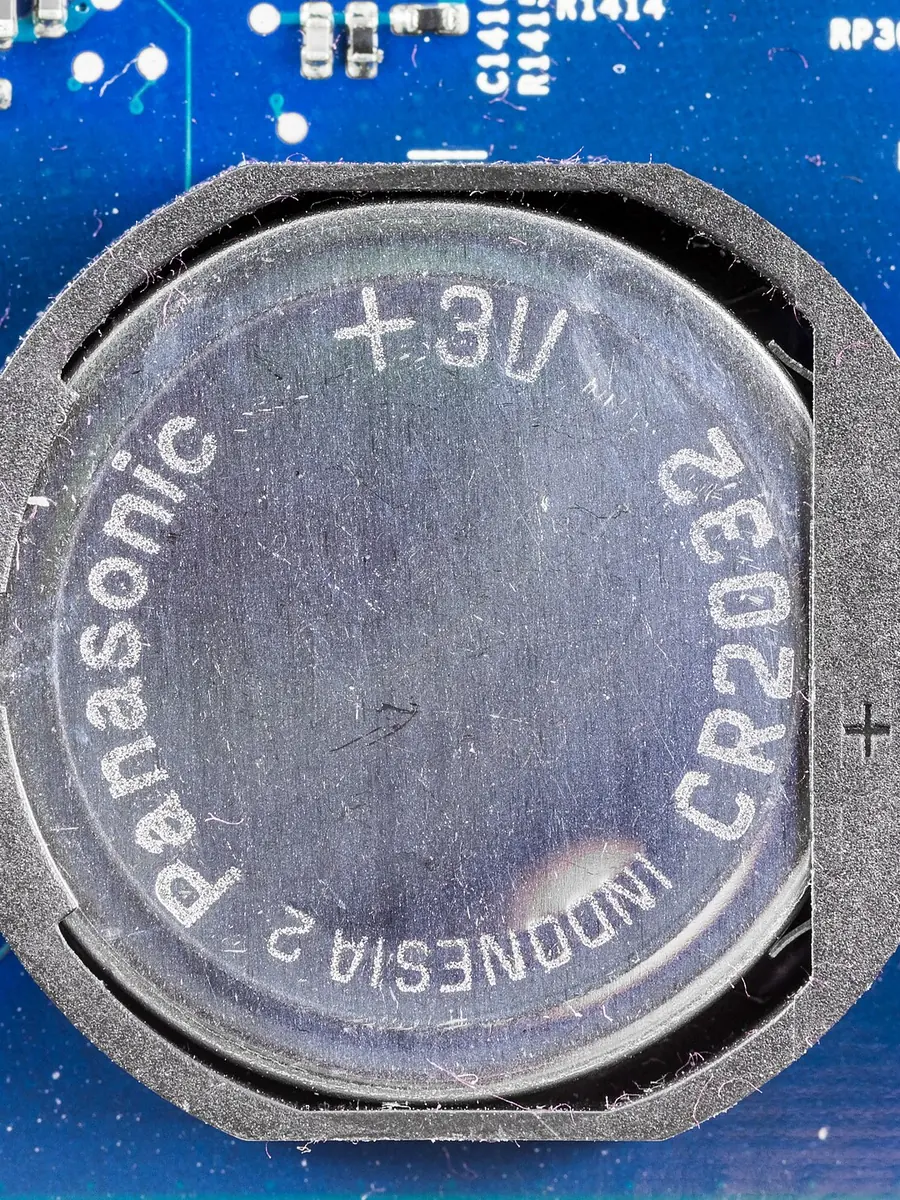
When the light comes on, the manufacturer instructs replacement with a CR2032, coin-type 3.0 V lithium battery. Even then the data is not lost immediately. A super-capacitor built into the design can hold the memory for four to seven days after the battery has become too weak to do so alone. Only after the capacitor discharges and the battery voltage collapses further will program logic and data memory be lost. This two-stage safety net—battery, then capacitor—is not universal across all cartridge designs, but it illustrates the underlying truth: retention time is always finite, and the window between a warning sign and irreversible loss can be alarmingly short.
How failure presents
The common belief that a dying battery leads to corrupted save files—garbled character names, half-loaded maps—is not supported by the primary-source behaviour of the memory components. The datasheet makes clear that once VCC decays, the RAM write-protects itself. In battery backup mode, inputs are ignored and outputs go high impedance. There is no mechanism for partial writes or slow corruption; the chip is either holding a consistent image or it is not.
The DL05 manual adds further clarity. A weak battery alone does not kill the data. The super-capacitor can prop up the memory for days. The P.R.E.S. Ltd. Advanced Battery-backed RAM manual for a rechargeable nickel-cadmium cartridge from the same era notes that regular use—at least two hours a week—recharges the cell and extends its life beyond five years. What kills a save is the exhaustion of every backup path. When the capacitor is drained and the battery is too feeble to maintain the minimum retention voltage, the memory state collapses. There is no creeping corruption; there is a cliff edge, and once over it the save is gone.
Flash and non-volatile saves
The cartridge era did not end with battery-backed SRAM. Later devices, and even contemporary industrial components, moved to schemes that decouple retention from a continuous power supply. Infineon’s nvSRAM integrates AutoStore capacitors that automatically shunt power to write the entire SRAM contents into non-volatile elements when the main supply fails. The data sits in that non-volatile store until power returns, and no battery is needed to preserve it between sessions.
That shift is not confined to memory chips. Some non-volatile digital potentiometers include data registers that can be read or written directly by the host and retain their settings without any battery. It is a small indication of how widespread the move away from pure battery-dependent storage became. For game cartridges built around nvSRAM or later flash memory, the frantic “read before touching anything” urgency does not apply, because the save is transferred to a non-volatile medium as part of the normal power-down sequence.
Handling and replacement
The industrial documentation points to a strict order of operations that home collectors ignore at their peril. The DL05 manual’s procedure—replacing the CR2032 when the warning LED glows, while the unit is still under power or before the capacitor expires—is a template. Applied to a cartridge-era game, the principle is identical: secure the data first, by booting the original hardware and copying the save, while the standby power is still adequate. The moment to act is not when the battery reads zero; it is while the chip remains in its quiet retention state and can still respond to a read operation.
The ABR cartridge documentation reinforces this with a different rechargeable chemistry. It shows that batteries kept topped up by regular use can last half a decade or more, but neglect—leaving the cartridge in a drawer for years—lets the cell discharge past recovery. If the battery goes completely flat and no capacitor buffer exists, the memory content is lost before a screwdriver reaches the shell.
The exact physical steps for replacing a coin cell soldered inside a cartridge shell vary from title to title, and no single primary-source document from the platform vendors spells out a universal procedure. What can be stated from the datasheet behaviour is the logical sequence.
The quiet tragedy of cartridge-era saves is not that the batteries die—all coin cells have a finite shelf life—but that the data frequently perishes before anyone thinks to copy it. The backup pathway is a one-way street. Once the capacitor’s last coulombs have leaked away and the battery has dipped below the chip’s retention threshold, the save is no longer recoverable from the cartridge itself. What was a tiny electronic memory becomes a blank chip, and decades of progress, scores, and characters dissolve into the same silence that had been holding them together.
- Read the save data from the cartridge while the original hardware is still able to recognise it—every minute of residual standby power matters.
- Remove the exhausted battery cell. In designs with a super-capacitor, this must be done before the capacitor discharges fully; in simpler carts, any delay risks data loss.
- Install a fresh cell of the correct chemistry and voltage.
- Write a known test save, power the system off completely, wait long enough to confirm the new battery holds the chip through a full power-down cycle, and verify that the data returns intact.